The next annual Knitting History Forum conference is on Saturday 7 February 2026, with presentations on the history of knitting. The conference is hosted online and tickets are available to purchase.
Nora Howley, knitting researcher and educator, founder of Knitting Tales, will present From Shetland sheep to USA knitters: exploring the history of Shetland wool in handknitting in the United States 1848 to 1990
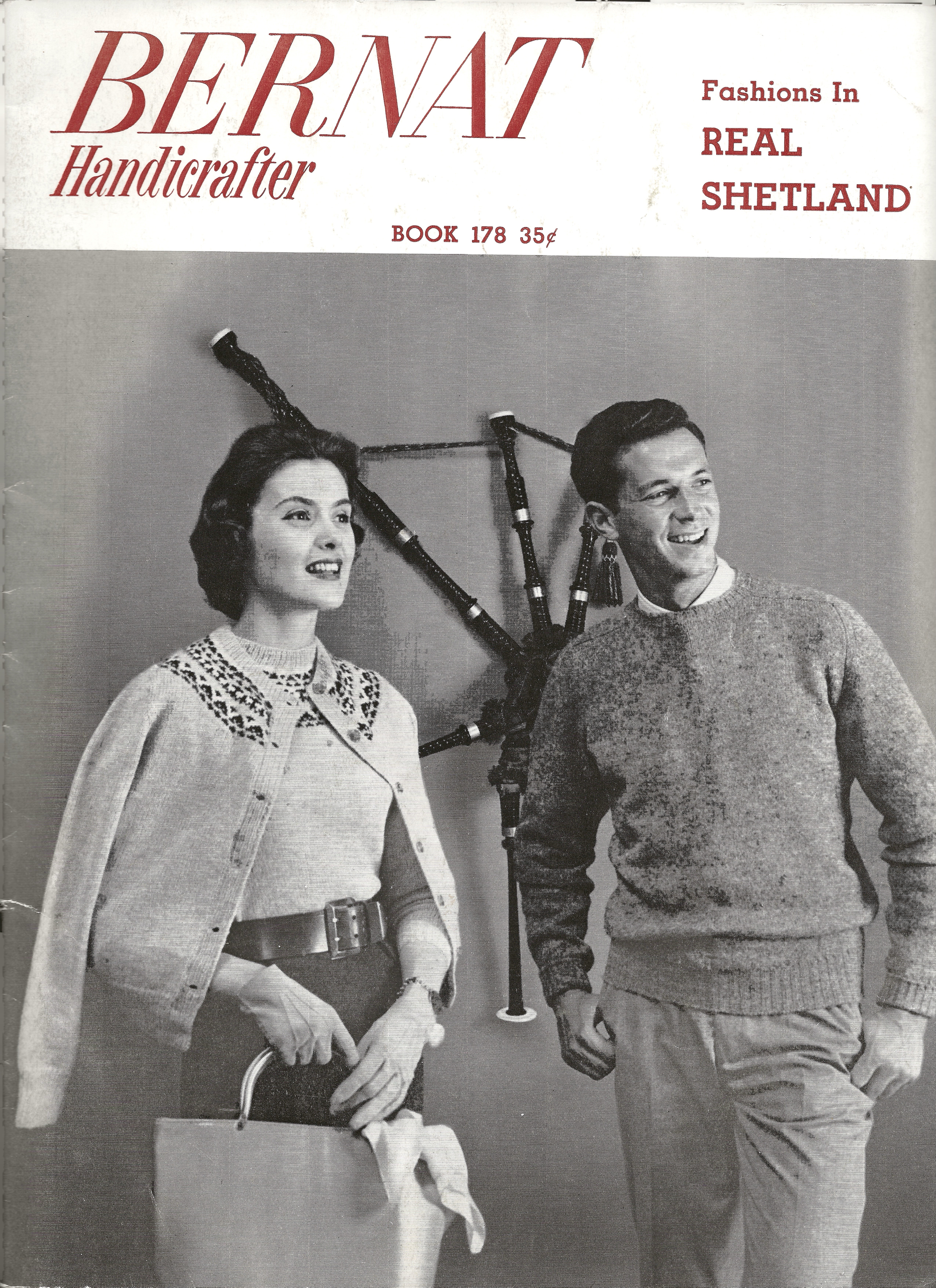
Since the first white people began the colonisation of the United States, wool from the British Isles was imported there. It is impossible to say what proportion may have come from Shetland at any given time. However, from the late 19th century, when a yarn industry selling to handknitters emerged, reference to Shetland wool and styles of knitting are found. Many of these are in yarn company’s branded patterns calling for specific products to be used for specific garments or accessories. By the early 20th century, multiple commercial yarn companies in the USA were selling Shetland labelled wool with patterns to go with it to handknitters. This paper will show how the name “Shetland” was used to signify the particular qualities of both yarn and styles of knitting.
It uses images and text from pattern books, women’s magazines, and industry publications, to demonstrate how “Shetlandness” has been represented for more than 100 years in an ever-changing industry before the emergence of the internet.
Biography for Nora Howley
Nora Howley is a knitter, researcher, educator, and storyteller whose career in education has spanned learners from toddlers to adults in their eighties. She completed her EdD at the University of Glasgow in 2019, a milestone that reignited her enthusiasm for research and discovery. She founded Knitting Tales as a platform to share her findings and insights.
Howley also curates and manages a collection of patterns by designer Ron Schweitzer—materials that never made the transition to digital formats and would otherwise be inaccessible to contemporary knitters. Her work is driven by a deep interest in the relationships between patterns, yarns, people, and places. She continues to teach knitting as a way to share her love of the craft and to encourage others to uncover and tell their own stories.
Image credit: Cover of Bernat Handicrafter’s Fashion in Real Shetland, Book 178 (1957), Emile Bernat & Sons Company, Jamaica Plain, Massachusetts, USA (image: Nora Howley)