The annual Knitting History Forum conference for 2026 was held online via Zoom on Saturday, 7 February 2026 from 11:15 to 17:30 GMT. This year’s conference was sold out. Throughout the event, in-person attendance fluctuated between 235 and 285 online audience members with many more expected to view the recordings that were made available the following day.
Viewers tuned in from around the world including Australia, Belgium, Canada, Czechia, Denmark, Estonia, Faroe Islands, France, Germany, Hungary, Ireland, Italy, Japan, Morocco, the Netherlands, Norway, Poland, Portugal, Slovakia, Spain, Sweden, the UK, and the US. Many of the attendees worked on textile craft projects as they viewed the presentations. The chat was very active throughout the programme with both questions and comments about the content of the presentations. Many attendees shared resources via the chat and made connections with others to continue the conversation after the event.
Sandy Black opened the conference with a warm welcome for guests and presenters. She noted that the conference offered 500 tickets all of which were taken, which she believes demonstrates changing attitudes about knitting and knitting history as academic subjects. Sandy announced that there is a new presentation proposal form available on the Knitting History Forum (KHF) website and encouraged people to submit their ideas for next year’s conference. She emphasised that the KHF welcomes presentations on a variety of knitting topics and value diversity in presentations.
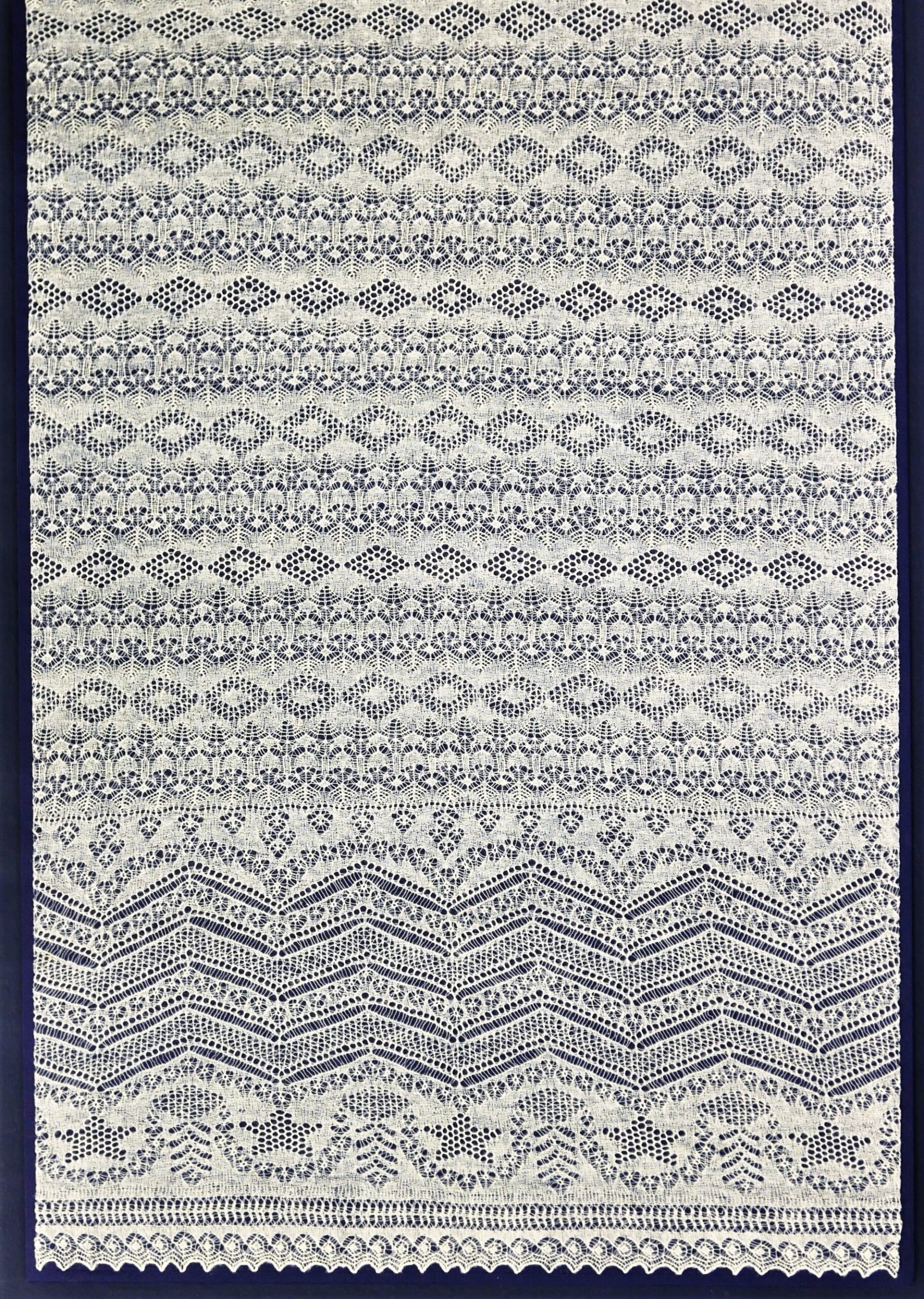
Shetland fine lace knitting: an overview of history and design was presented by Carol Christiansen, the Curator of Collections at Shetland Museum and Archives in Scotland. This talk explored the origins and trade mechanisms of Shetland fine lace knitting and the materials and skills required for its development. Carol began by providing an overview of the Shetland Museum and Archives in Lerwick before focusing on the museum’s extensive lace collection. She talked about the history of Shetland lace making while situating it within the broader themes of economy, industry, transportation, and fashion. Carol stressed that the preparation and spinning of fine lace from Shetland wool was crucial for the success of the knitting design and its execution. Moreover, the production of one fine lace shawl required the skills of several different craftspeople who each specialised in one aspect of production – the making of the yarn, design, and knitting. The presentation included an analysis of the three parts of a Shetland lace shawl and addressed how and why Shetland lace motifs and techniques were eventually applied to tunics and blouses.
The development of circular knitting needles during the 20th century was presented by Susan Webster, a collector and researcher of knitting tools who is based in Australia. This presentation examined the origin of early circular knitting needles in the UK and US: what they were made of; and how they were packaged and marketed. Susan’s presentation was rooted in her extensive collection of knitting needles that have been sourced through second hand shops and e-commerce platforms. She has developed a research database of more than 1,000 knitting needle brand names and manufacturers, which she shares on her website. Crucially, her personal collection includes the original packaging in which the needles were sold. These packages provide information about changes in patents, needle gauges, fashion, marketing, and consumers over time. Susan concluded with a call for any information about circular needles made from natural materials such as baleen or whalebone, which may have been in use until the 19th century.
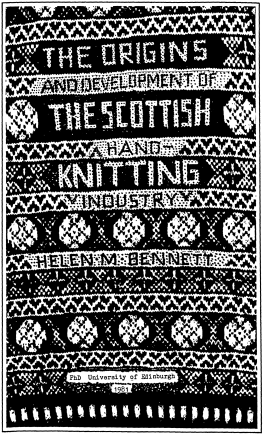
Fair Isle knitting: myths and origins was presented by Helen Wyld, the Senior Curator of Historic Textiles at National Museums Scotland. This talk examined the myths and perceptions of Fair Isle knitting versus the reality of its development and practice based on available evidence. Helen began by outlining Fair Isle knitters’ concerns with and objections to the portrayal of Fair Isles knitting on the popular British television show, Game of Wool. She then offered a definition of Fair Isle knitting that centres skills, raw materials, and place. From there, she examined the evidence available for early Fair Isle knitting in the 19th century. Understudied pieces at the National Museums Scotland are crucial for Fair Isle knitting researchers because they are some of the few pieces of Fair Isle knitting that are reliably dated. Archival evidence offers further information about the spread of Fair Isle knitting, especially through the presentation of Fair Isles knitters at 19th century exhibitions showcasing crafts and the gifting of Fair Isles knitting to influential figures. Helen stressed that Fair Isle knitting history should be based on the evidence available rather than popular histories lacking hard evidence, such as that of the 16th century Spanish Armada ‘bringing’ knitting to Fairl Isle.
A refreshment break took place from 13:15-14:30 (GMT). During this time, break-out rooms were made available to participants from 13:45 to 14:20. These rooms fell under the categories: show and share, make new friends, catch up with old friends, and potluck. A few of the rooms had up to 20 participants. The conversations were lively and provided a chance for attendees to see and speak with one another in an unstructured, informal atmosphere.
From Shetland sheep to US knitters: exploring the history of Shetland wool in hand knitting in the United States 1848-1990 was presented by Nora Howley, a knitting researcher, educator, and founder of Knitting Tales based in the US. This presentation highlighted the important role the wool industry played in defining and promoting the use of Shetland wool in the US. Nora began with the 19th century when the National Association of Wool Manufacturers sought to bring all sectors of the wool industry in the US under one umbrella. According to this organisation’s definitions of the different types of sheep in the US, Shetland sheep’s wool was ideal for fabrics rather than carpets. In the latter half of the 19th century, knitting became more of a leisure activity and knitting yarn companies and ladies’ magazines offered patterns featuring Shetland wool. This trend continued into the 20th century, especially after WWII when US companies began drawing on images of Scotland to market their Shetland yarns and accompanying patterns. Finally, Nora noted Elizabeth Zimmerman’s role in promoting Shetland wool and knitting in the US with her importation of Shetland wool and pattern for a Fair Isle sweater knit in the round.
The multi-stranded history of hand knitting in Appalachia was presented by Emily Hilliard, the Folklorist at Berea College in Kentucky, US. In this presentation, the available evidence for hand knitting in the Appalachian region of the US and the question of a distinct Appalachian knitting tradition were examined. Emily shared her in-progress research project that seeks to identify a place-based knitting tradition in Appalachia. She noted that early European settlers came to Appalachia with their own knitting traditions, which then spread to enslaved African populations and Native Americans living in the area. While information about and evidence for these early knitting traditions is scant, the more traceable, regional history of small-scale sheep and wool production offers more evidence. Emily is working with archives, museums, surveys of contemporary knitters, and interviews with shepherds and yarn producers to answer questions about techniques, styles, patterns, products, and the impact of cross-cultural exchange. Civil War era letters, educational programmes, national fairs, and knitted objects collected at the turn of the 19th to 20th centuries offer more intimate views of the topic. Emily has yet to identify a specifically Appalachian style of knitting. Nevertheless, her work demonstrates that knitting has been a culturally significant practice in Appalachia and highlights the vital contributions women made through their knitting skills and expertise.
Knitting the pieces together: fragments of knitted stockings from the Swedish warship Vasa 1628 was presented by Josefin Lindegren, a dress and art historian working at Skansen Museum in Stockholm, Sweden. This presentation focused on the knitted fragments of a sock inside a shoe that was found on the stern side of Vasa, a Swedish warship that sank outside Stockholm harbour in the early 17th century. Josefin began by introducing the shipwreck, which was salvaged in 1961. The wreck contained roughly 12,000 textile and leather fragments varying in condition from complete garments to scraps. The textile finds are significant because the crew was not provided with uniforms, which means the wreck offers a unique glimpse at the everyday clothing of the common, working classes. Josefin chose to examine the mineralised and corroded fragments of a sock within a shoe that belonged to a boy aged 14 to 17 years. Significantly, the find includes evidence of woven patches on the sock. Through her examination, Josefin was able to detect decreases and a V-shaped form that could have been the toe or heel of the sock. Through experimental knitting, she is trying to understand the structure of the socks and recapture the feel of knitting them in order to better understand the person who made them.
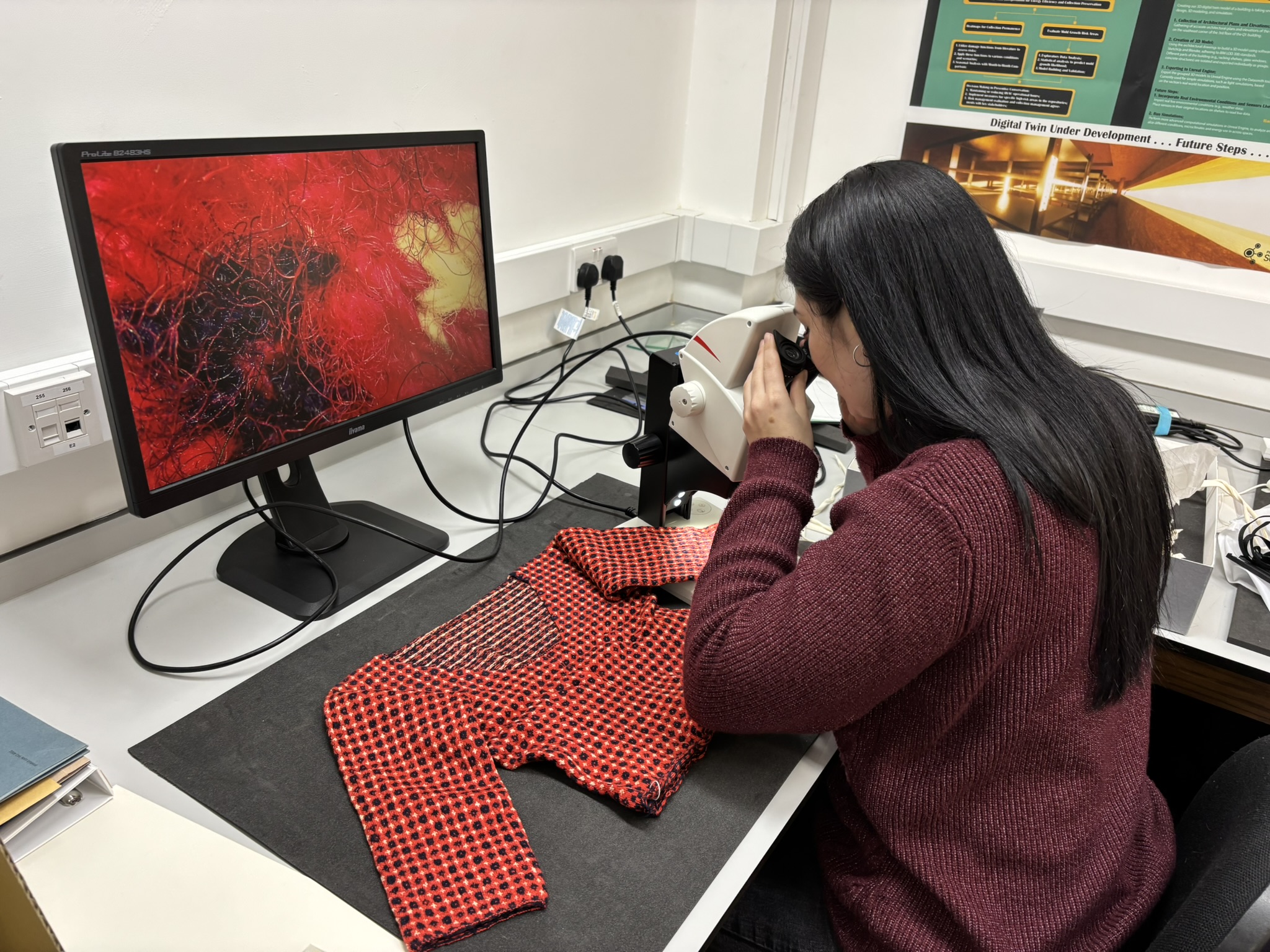
The undelivered sweater: a 200-year-old knitting time capsule was prepared by a group of four researchers: Amanda Bevan, the Head of Legal Records and the Prize Papers Team at the National Archives, UK; Sarah Noble, Head of Conservation for Imaging at the National Archives, UK; Margretha Nónklett, Head of Ethnology at the Faroe Islands National Museum; and Noomi í Dali, Lecturer in Textile Arts at the University of the Faroe Islands. This presentation shared information from a range of historical, archival, craft, and scientific perspectives that brought to life the story of an early 19th century sweater from Tórshavn. Amanda started by introducing a box of private letters and parcels containing a red knitted sweater and four pairs of stockings – all in excellent condition – that are being examined as part of the Prize Papers Project. These items were aboard the Anna Maria, a cargo ship sailing from the Faroe Islands to mainland Denmark in 1807. The ship was confiscated en route by the British Navy, and its contents are now at the National Archives in the UK. Sarah Noble continued with a discussion of the scientific analysis of the sweater that included MSI, FORS, and FTIR imaging. These tests concluded that the sweater was made of madder and indigo dyed wool as well as undyed cotton. On behalf of her colleague Margaretha, Sarah discussed the details of the sweater provided in an accompanying letter. The sweater had been made as a gift and was referred to in Danish as a night jacket, a type of close-fitting sweater worn by artisans, commoners, and peasants. Noomi í Dali provided information about the sweater’s construction and compared it to other sweaters from the Faroe Islands that now form part of the national costume. Noomi noted the spin and ply direction of the yarns; the fine knitting gauge; the combined use of flat and in-the-round knitting; and bottom-up knitting for the body and top-down knitting for the sleeves. Noomi concluded by commenting on the impact the find has had on the Faroese national costume today.
Jane Malcolm-Davies concluded the conference by thanking the presenters, audience, and organisers. She reminded the audience to submit proposals for the 2027 Knitting History Forum Conference via the form on the website. She noted that while there appeared to be a theme for this year’s conference, it was unintentional. All regions and topics pertaining to knitting are welcome. Audience members who want to refer to information shared in the chat, which included many useful links and tips, can scroll through it when they access the event recordings. As a final word, Jane noted that the size of the audience this year, the array of presentations, and the increase in scholarly studies with knitting as a focus are a testament to the growing value of knitting as an academic subject. Her final call to action was to keep researching and keep sending proposals to the KHF team.
Irene Waggener, independent researcher and author of Keepers of the Sheep: Knitting in Morocco’s High Atlas and Beyond
Consider offering a proposal for a presentation at the next annual online conference.
Use this proposal form to send your suggestions.