The next annual Knitting History Forum conference is on Saturday 7 February 2026, with presentations on the history of knitting. The conference is hosted online and tickets are available to purchase. Please note – If you cannot attend on the day but would like to watch recordings of the presentations, please buy a ticket for the event in advance. It will not be possible to access the recordings without a valid ticket for the conference and they will not be available to buy after the event has taken place.
Knitting the pieces together: fragments of knitted stockings from the Swedish warship Vasa 1628
Josefin Lindegren, dress and art historian, Skansen Museum, Stockholm, Sweden
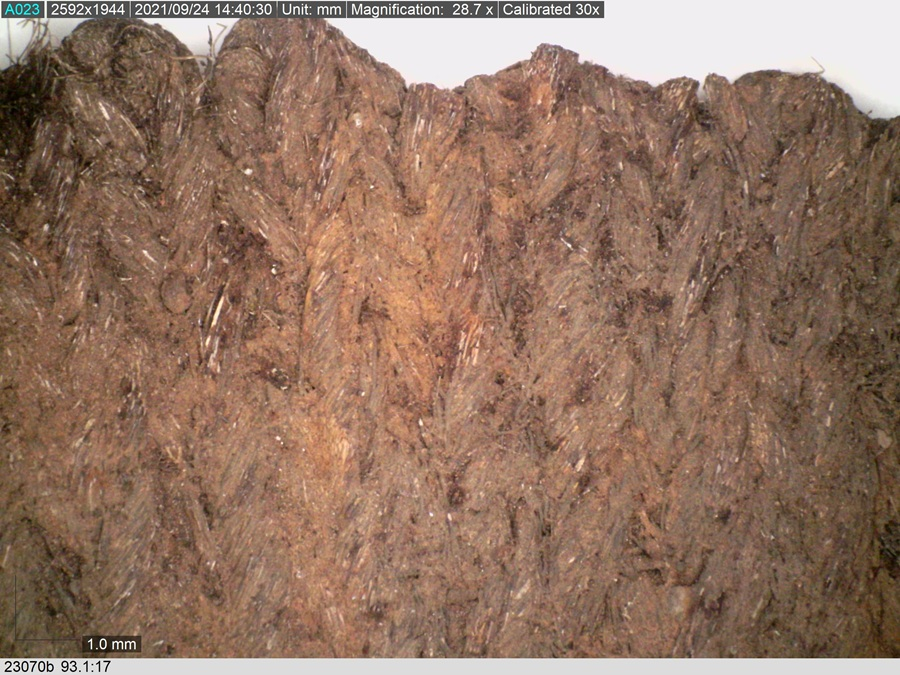
The research project Clothing and shoes from the Swedish warship Vasa aimed to document and analyse the better preserved parts of the museum’s textile collection from 2020 to 2023. It is a unique collection with well over 5,600 fragile textile fragments from clothes and shoes found onboard. Several textile techniques are represented but there are few knitted fragments and even fewer for which the objects are identifiable with certainty. One knitted find merits particular attention: it is fragile, brownish orange and hardened due to mineralisation and corrosion. The find consists of around 50 small knitted fragments. These were found, together with woven fragments, inside a pair of shoes just outside the ship’s stern. The shoes, made of high-quality goat skin in the latest fashion, also contained foot bones from a young male individual.
A detailed documentation and analysis to record observations and measurements of the fabric and yarn was undertaken. Only the foot of the stocking has been preserved. This makes it hard to know anything about the leg section. In spite of the fragments’ poor condition, vital information could be retrieved from the foot such as technique, gauge, the loop height and width, knitting direction and toe shaping in the form of decreases. Several woven textile fragments were found on top of the knitted fabric with imprints from whipstitches along the edges. This indicates that the knitted stockings were mended with woven textile patches. Test swatches were knitted using yarn and gauge equivalent to the fragments’ as part of a reconstruction project at the Vasa Museum. Two pairs of stockings were reconstructed using a pattern based on archaeological finds from Tudor London and Norwich published in The Typical Tudor: reconstructing everyday 16th century dress.
Fragments of the knitted stocking found inside a pair of shoes, Fnr 23070 (image: Vasamuseet, CC BY)
Biography for Josefin Lindegren
Josefin Lindegren is a dress and art historian from Stockholm with a background that includes working with museum collections, from archaeological textiles to modern theatre costumes. The range of work has provided different ways of analyzing dress and textiles. Currently working at the open-air museum Skansen in Stockholm, focusing on documentation and digitalization of Skansen’s historical costume collection.
Image credit: Fragments of the knitted stocking found inside a pair of shoes, Fnr 23070 (image: Vasamuseet, CC BY)
The next annual Knitting History Forum conference is on Saturday 7 February 2026, with presentations on the history of knitting. The conference is hosted online and tickets are available to purchase
Emily Hilliard, Berea College Folklorist, Berea, Kentucky, Unites States will present The multi-stranded history of handknitting in Appalachia
Sources on traditional Appalachian folklife often cite handknitting as a practice commonly done at home from the arrival of the early settlers. But specific details on what the knitting tradition looked like in the mountain south of the US are scant and overshadowed by the region’s well-documented weaving history.
Knitting was likely brought to Appalachia by Ulster Scots who emigrated from Northern Ireland in the mid to late 1700s. In early 18th century Ulster, women commonly knitted and sold wool stockings to supplement their household income and they continued this practice in their new country. The more traceable regional history of small-scale sheep and wool production offers more evidence. According to historian Thomas Clark, the first settlers to Kentucky brought sheep with them. The Merino breed was introduced to the state in 1809, with English breeds such as Leicester, Southdown, and Cotswold arriving by 1820. Scholar Donald Davis reports that by 1830, sheep husbandry was practiced on a large scale in the mountain south. Scots Irish subsistence farmers primarily used their flocks to produce wool for handknitted and woven blankets and garments used in the home.
Over time, Scots Irish settlers’ knitting practices influenced and were influenced by handknitting traditions of other immigrants to the region, including Germans, Highland Scots, Welsh, and Irish. By the early 1800s, the Cherokee had adopted sheep farming and wool production, regularly exhibiting spinning and knitting at their national fairs. Susan Strawn notes that enslaved people in the American South, including Appalachia, knitted for their own families and were forced to knit for their enslavers.
Folklorist Emily Hilliard has researched the cultural history of handknitting in Appalachia through archives and artefacts in the US and Ireland. She has undertaken fieldwork with contemporary knitting practitioners, wool producers, and sheep farmers. Her paper addresses questions about techniques, patterns, styles, products, culture, and the economics of handknitting in Appalachia from the 18th to early 20th centuries. How has cross-cultural exchange shaped this tradition over time? What is the relevance of cultural dialogue, women’s lives and work, and home-based agrarian economies to the history of knitting in Appalachia?
Biography for Emily Hilliard
Emily Hilliard is the Folklorist at Berea College in Berea, Kentucky and the former West Virginia State Folklorist and Founding Director of the West Virginia Folklife Program. Her book, Making Our Future: Visionary Folklore and Everyday Culture in Appalachia(UNC Press, 2022) was named a finalist for the 2022 Weatherford Award in nonfiction for books “best illuminating the challenges, personalities, and unique qualities of the Appalachian South.” She is the recipient of a 2025 Center for Craft Research Fund Grant for the project, “The Multi-Stranded History of Hand Knitting in Appalachia.”
Image credit: The dropped stitch (circa 1897) by John H Tarbell, Asheville, NC (image: Library of Congress Prints & Photographs Division Washington DC, USA)
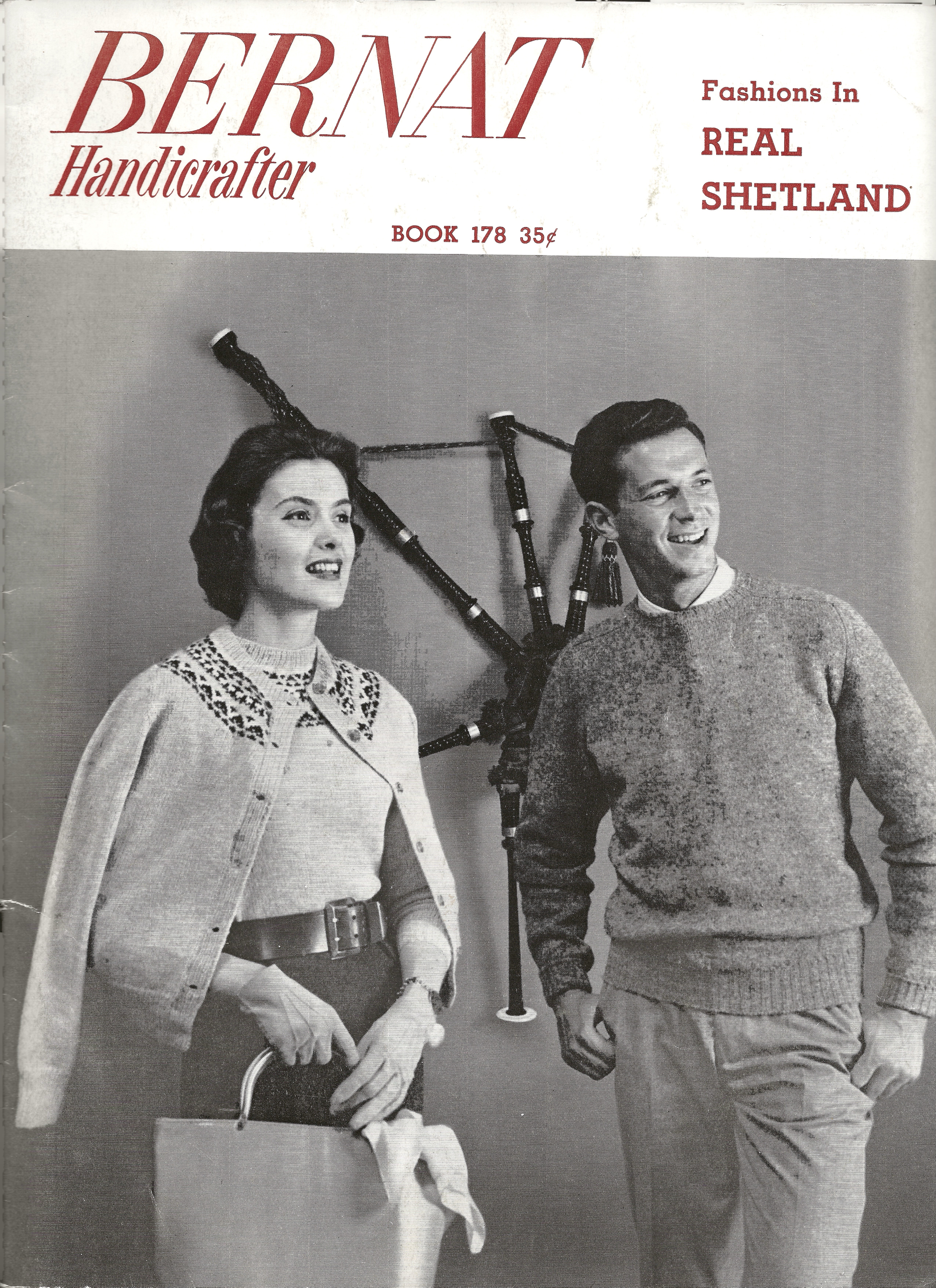
Cover of Bernat Handicrafter’s Fashion in Real Shetland, Book 178 (1957), Emile Bernat & Sons Company, Jamaica Plain, Massachusetts, USA (image: Nora Howley)
The next annual Knitting History Forum conference is on Saturday 7 February 2026, with presentations on the history of knitting. The conference is hosted online and tickets are available to purchase.
Nora Howley, knitting researcher and educator, founder of Knitting Tales, will present From Shetland sheep to USA knitters: exploring the history of Shetland wool in handknitting in the United States 1848 to 1990
Since the first white people began the colonisation of the United States, wool from the British Isles was imported there. It is impossible to say what proportion may have come from Shetland at any given time. However, from the late 19th century, when a yarn industry selling to handknitters emerged, reference to Shetland wool and styles of knitting are found. Many of these are in yarn company’s branded patterns calling for specific products to be used for specific garments or accessories. By the early 20th century, multiple commercial yarn companies in the USA were selling Shetland labelled wool with patterns to go with it to handknitters. This paper will show how the name “Shetland” was used to signify the particular qualities of both yarn and styles of knitting.
It uses images and text from pattern books, women’s magazines, and industry publications, to demonstrate how “Shetlandness” has been represented for more than 100 years in an ever-changing industry before the emergence of the internet.
Biography for Nora Howley
Nora Howley is a knitter, researcher, educator, and storyteller whose career in education has spanned learners from toddlers to adults in their eighties. She completed her EdD at the University of Glasgow in 2019, a milestone that reignited her enthusiasm for research and discovery. She founded Knitting Tales as a platform to share her findings and insights.
Howley also curates and manages a collection of patterns by designer Ron Schweitzer—materials that never made the transition to digital formats and would otherwise be inaccessible to contemporary knitters. Her work is driven by a deep interest in the relationships between patterns, yarns, people, and places. She continues to teach knitting as a way to share her love of the craft and to encourage others to uncover and tell their own stories.
Image credit: Cover of Bernat Handicrafter’s Fashion in Real Shetland, Book 178 (1957), Emile Bernat & Sons Company, Jamaica Plain, Massachusetts, USA (image: Nora Howley)
The next annual Knitting History Forum conference is on Saturday 7 February 2026, with presentations on the history of knitting. The conference is hosted online and tickets are available to purchase
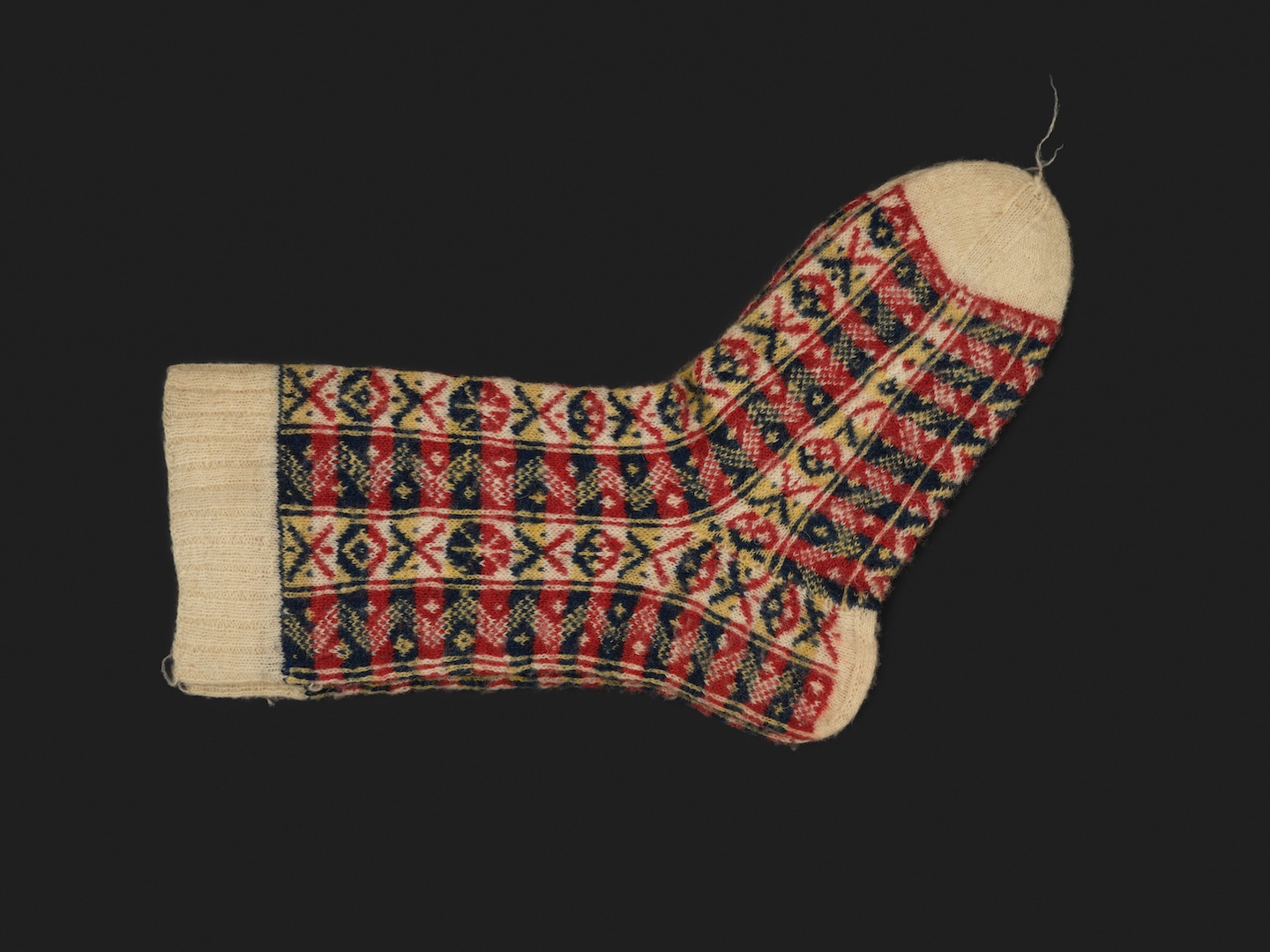
The Fair Isle knitting collection at National Museums Scotland: history, craft and identity
Helen Wyld, Senior Curator of Historic Textiles, National Museums Scotland
Fair Isle knitting, with its brightly coloured geometric patterns, is one of Scotland’s most recognisable exports. A constant presence in global fashion since the 1920s, it is still produced by hand knitters in Shetland today. But despite its omnipresence, the origins of Fair Isle are not well understood. This is a result of the poor survival of early examples, a lack of documentary evidence, and a focus on the role of Fair Isle in 20th century fashion in the literature.
The collection at National Museums Scotland, which has never been the subject of serious study, has the potential to change the interpretation of the early history of the craft. Three groups of objects, which are dated to the 1850s, 1870s and 1880s, thanks to their documented museum history, provide a concrete starting point for dating and assessing early Fair Isle knitting.
These objects also provide a unique insight into the ways that Fair Isle was described, marketed and consumed in its early decades. Drawing on internal museum documentation, donor records, the catalogues and reviews of international exhibitions, publications by Shetland residents, and contemporary trade material, Helen Wyld will explore the mythology that surrounded Fair Isle knitting from its first ‘public’ appearance, at the 1851 Great Exhibition. She will show that the qualities of authenticity, hand craft and local specificity that are today embedded in the Fair Isle brand have their origins in the mid-19th century, and were both a reaction against, and a product of, the rapid industrialisation of the period.
Biography for Helen Wyld
Helen Wyld is Senior Curator of Historic Textiles at National Museums Scotland, where she is responsible for European and Scottish textiles from the medieval period to 1850. Helen is a specialist in the history of European tapestry, and her book The Art of Tapestry was published in 2022. Her research interests range from medieval woven silks to Paisley shawls and Scottish knitting
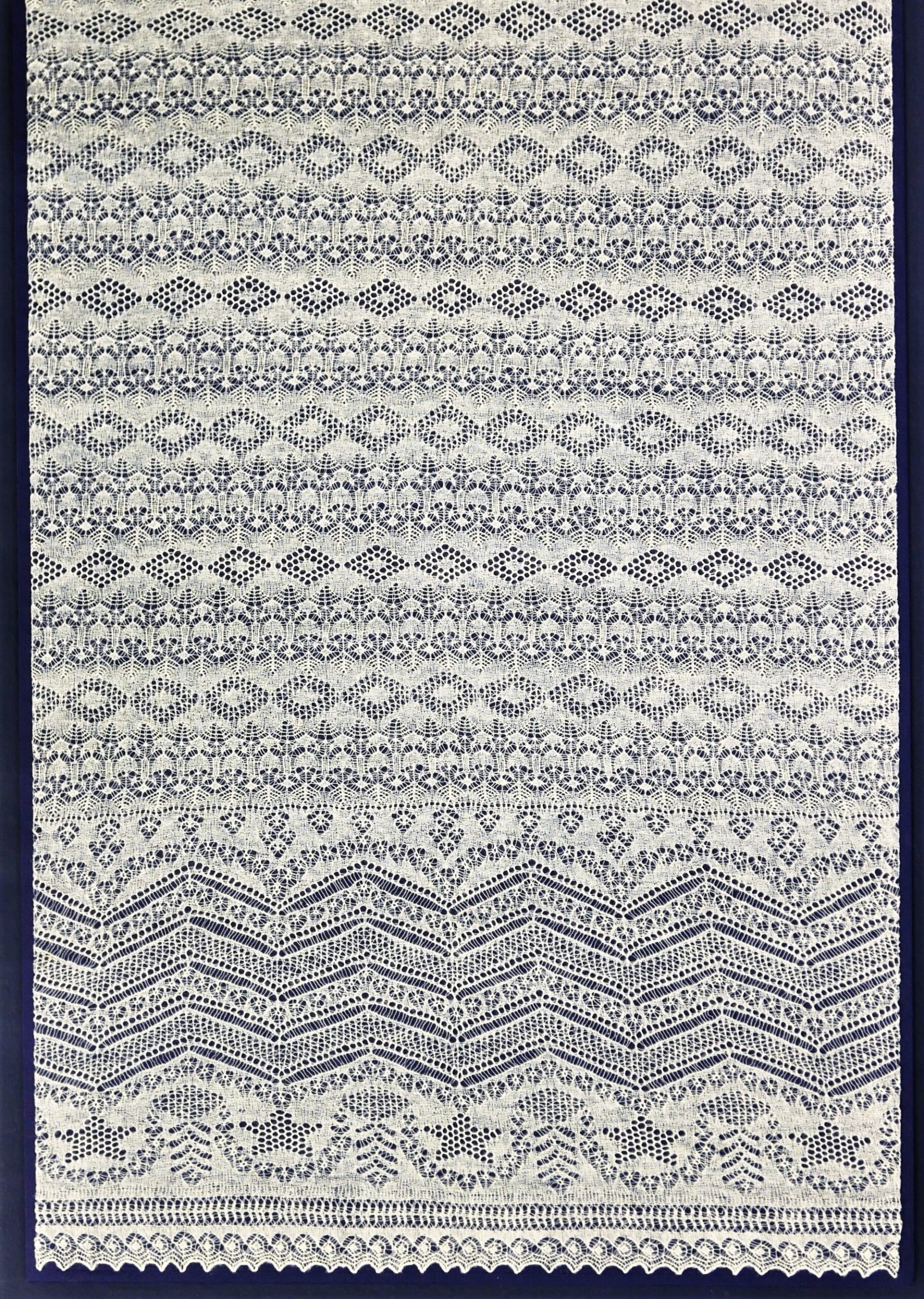
Detail of a shawl (TEX 2004.303) given as a wedding present, Lerwick, 1921, Shetland Museum
The next annual Knitting History Forum conference is on Saturday 7 February 2026, with presentations on the history of knitting. The conference is hosted online and tickets are available to purchase.
Carol Christiansen, Curator of Collections, Shetland Museum and Archives, will present Shetland Fine Lace Knitting: an overview of history and design
In the late 1830s, a form of extremely fine openwork knitting in wool emerged in a small community in the Shetland islands. Shetland Fine Knitted Lace would become part of the large international trade in fashion accessories and garments throughout the Victorian and Edwardian periods. At the same time, it challenged authors of early knitting pattern books and inspired the development of machine-knitted lace shawl manufacture in the British midlands. Carol Christiansen will explore the seemingly improbable origins and trade mechanisms of Shetland fine knitted lace, and the materials and skills required for its development. In particular, the preparation and spinning of very fine wool from the Shetland sheep breed was crucial to the success of knitting design and execution. The paper will set out the important role of the hand spinner as separate from the designer-knitter.
Surviving collections of Shetland knitted lace show a continuum of design principles, providing a way to define the craft. Primarily, motif placement and design complexity was dictated by Victorian fashion: how the garment would be worn against fashions of the day, showing off the most complex design areas of the garment as it was draped on the body. These will be illustrated with 19th century garments from Shetland Museum’s collection.
In the second half of the 19th century, the East Midlands began to develop machines which could produce fine shawls in openwork knitting. For a time, these garments were marketed as Nottingham-Shetland lace, in an attempt to mimic and undercut the hand knitting cottage industry in Shetland. This resulted in differences in design and manufacture.
Some lace knitters experimented with new styles, possibly as a result of commissions, keeping abreast of fashion from the 1850s into the first half of the 20th century. The change from designing and making two-dimensional garments to blouses beginning in the 1920s will be explored in light of a reliance on traditional Shetland knitting techniques to create three-dimensional lace garments in the round. The Victorian specialised craft continues to inspire people into the 21st century, from local makers to haute couture designers.
Biography for Carol Christiansen
Carol Christiansen has been Curator of Collections at Shetland Museum and Archives since 2006. She received her doctorate in Archaeology with a specialism in textiles from the University of Manchester in 2003. Her research on Shetlandic, Scottish, and Nordic archaeological and historical textiles has been published widely. She is the author of Taatit Rugs: the Pile Bedcovers of Shetland (2015) and Shetland Fine Lace Knitting: recreating patterns from the past (2024).
Image credit: Detail of a shawl (TEX 2004.303) given as a wedding present, Lerwick, 1921, Shetland Museum
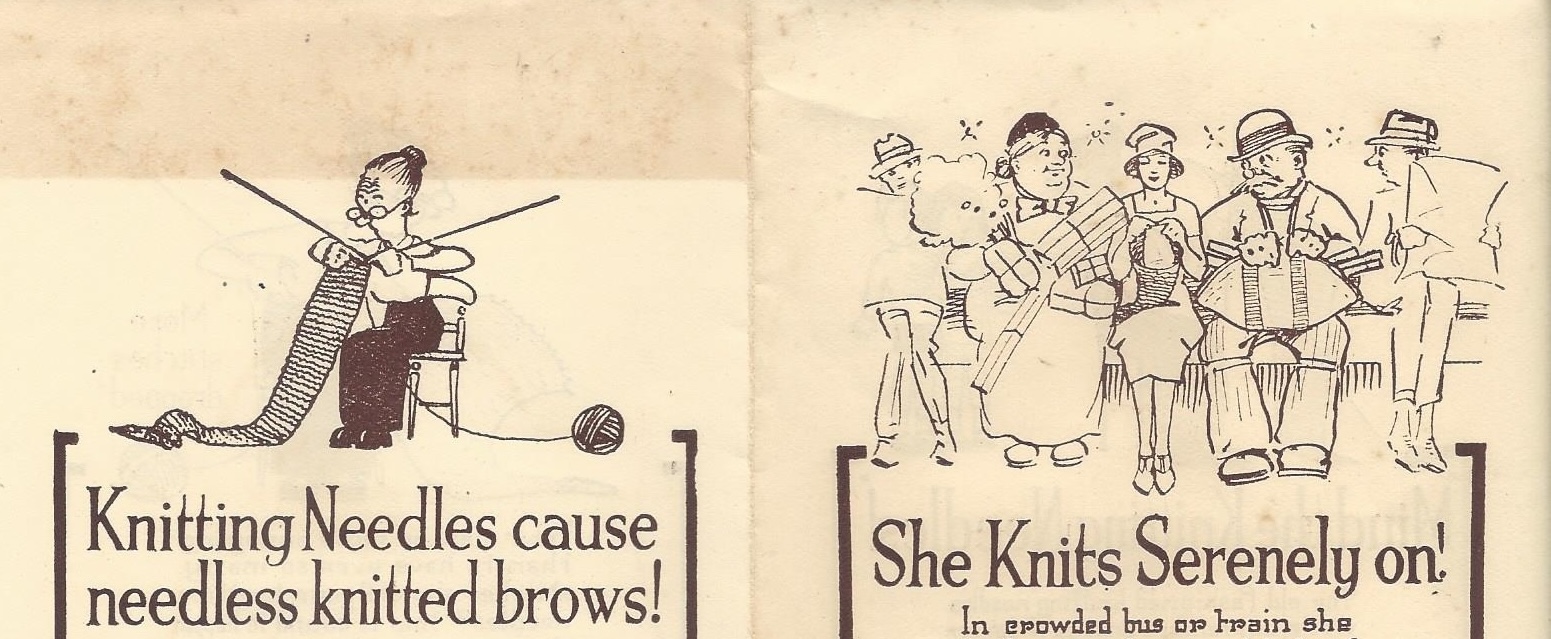
Promotional leaflet for Flexiknit (1920s), showing the old-fashioned knitter with her dangerous, slippery double pointed needles and the ‘modern girl’ with her circular needle
The next annual Knitting History Forum conference is on Saturday 7 February 2026, with presentations on the history of knitting. The conference is hosted online and tickets are available to purchase.
Susan Webster, collector and researcher of knitting tools, will presentThe development of circular knitting needles during the 20th century
The circular knitting needle is now an established tool among handknitters. But commercial production of circular needles is only about 100 years old. Before that, it was double points all the time. Susan Webster discusses the origin of early circulars in the UK and US, what they were made of, and how they were merchandised.
The earliest patents in the UK date to 1893 and 1906 and in the US to 1918. However, these registrations did not result in their immediate appearance in wool shops and haberdashery departments. Early UK packaging for Flexiknit and Abel Morrall’s Twin Pin gives patent dates of 1921 and 1922. Early circulars were all metal cables attached to short metal pins. Marketing messages accompanied these new, boxed products and claimed that circulars were modern, easier to use, less dangerous, and reduced the risk of losing a needle. US packaging – manila envelopes and cardboard backing sheets – was cheaper to produce. Americans used their own distinctive marketing, including differentiation of needle shape and materials, claims of design superiority, use of house-branding, and buying groups.
In the 1930s, American firms were offering rigid plastic circulars in parallel with metal circulars. The early materials such as celluloid and casein were easier to manipulate but the rigid plastics were hard to store and some were highly flammable. By the late 1930s, nylon and other flexible plastics had been developed, although all such innovations were soon sucked into war production. World War II had many effects on hand knitting tools such as no nickel-plating to prevent rust, no British sizing in the US for double points or circulars, and shortages of materials which forced reliance on “make-do and mend”. Soon after the war, flexible nylon circulars with metal pins and entirely nylon single piece circulars appeared. There were similar to the earlier rigid plastics but much more flexible. Few advances have been made in the basic tool since this era.
Biography for Susan Webster
Susan Webster is a collector of and researcher in knitting needles and tools, with a special interest in the period when commercialisation and branding of needles were being developed.
Susan grew up in the United States, but has lived her adult life in Australia. Retired since 2003, she has built up a research database of over 1000 knitting needle brand names and manufacturers, with about 900 physical specimens. She shares her information on her website www.knitting-needle-notions.com.au. Many of her articles and presentations are also available on this site.
Susan has published several research articles in the TCI Bulletin and in 2024-2025 completed a three-part series on the history of circular knitting needles. She has spoken and published in Britain and Australia too. She is a past president of the Needlework Tool Collectors Society of Australia.
She is still a keen collector. “The more you collect, the more you want to know,” she said.
Image credit: Promotional leaflet for Flexiknit (1920s), showing the old-fashioned knitter with her dangerous, slippery double pointed needles and the ‘modern girl’ with her circular needle
The Knitting History Forum is pleased to announce that the next annual conference is on Saturday 7 February 2026, with presentations on the history of knitting. The conference is hosted online.
The Knitting History Forum is an international network for the history of knitting and crochet. KHF advances and promotes the history of knitting through research, exchange of ideas and information, and by historical reconstruction. Bookmark the KHF website!
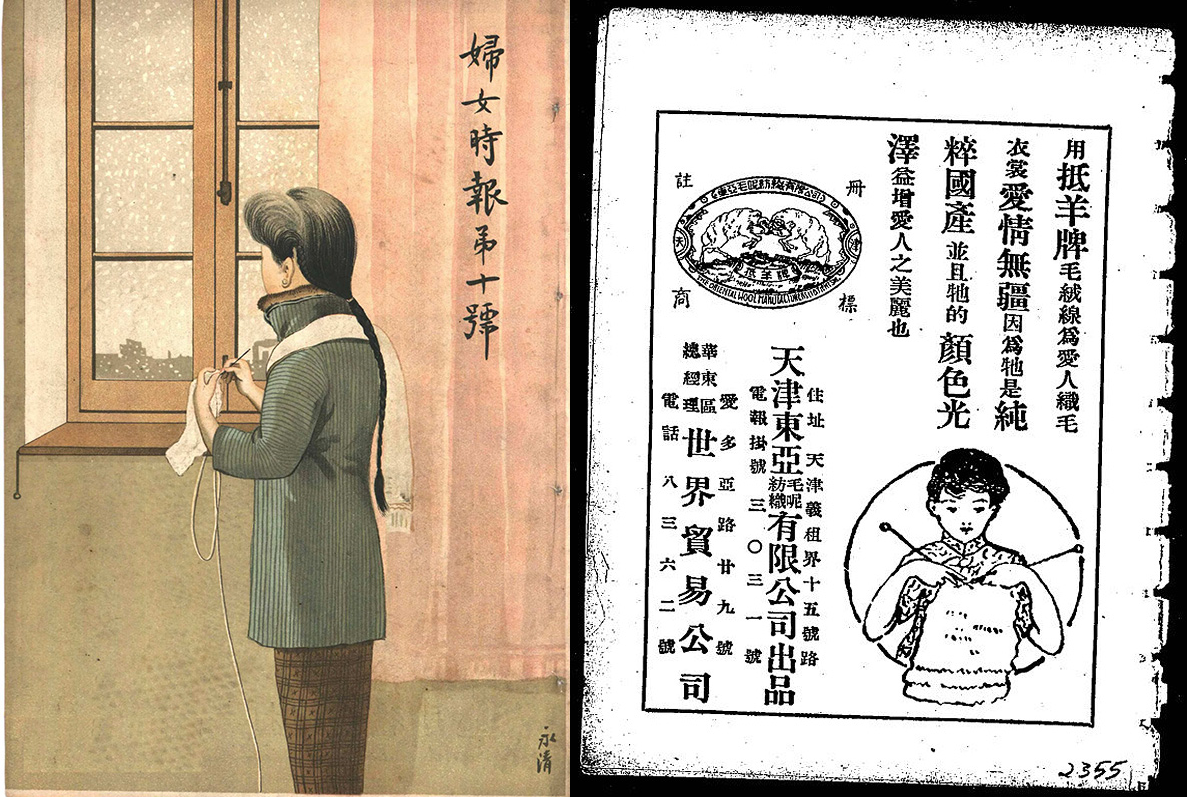
Trista Yeung on the historical evolution of needlework in China focusing on its economic and cultural impacts on women. Left: Cover of the magazine Funü shibao (The Women’s Eastern Times) 1913, issue 10 and (right) an advertisement for the first Chinese wool brand, Diyang pai (1933) (Image: Chinese Women’s Magazine Archive, Heidelberg University)
The Knitting History Forum Conference 2025 took place online on Saturday 1 February with 185 participants joining in. Many of the participants took the opportunity to present themselves in the Lobby and the chat was active with discussions throughout the event. The participants listened in from all over the world, and many of them knitted or crocheted during the event, as well as posing questions and discussions in the chat. The chair of the KHF, Professor Sandy Black, officially opened the conference by welcoming all participants and speakers and presenting the programme for the day.
The morning session started with the paper Knitting history in China: from the late 19th century to the early 20th century presented by Trista Yeung, PhD candidate at the University of Hong Kong and lecturer at The Hong Kong University of Science and Technology. She began with a brief historical background of China at this period and then shared her research into how knitting, both manual and by machine, had been introduced and disseminated in China in the late 19th century and early 20th century. We heard about the first factories with knitting machines as well as the opportunity for rural women to work from home with rented knitting machines to earn money. Yeung also shared some insights into the women who played a big part in the knitting history of China, such as Zeng Jifen, the first recorded woman to have learned hand knitting, from a missionary’s wife in the 1880-1890s. We also learned about Feng Quiping who founded knitting clubs, teaching classes, and published knitting patterns. As a conclusion, Yeung talked about historical gender roles and how knitting became an essential part of the Chinese women’s identity in the early 20th century.
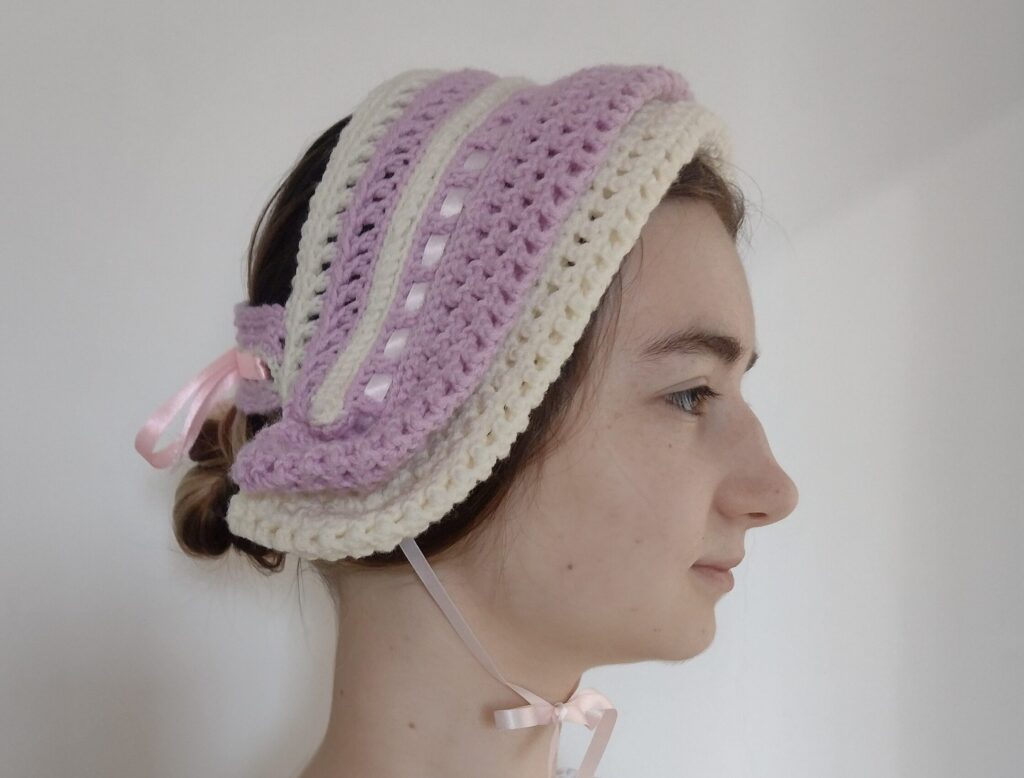
‘Half cap in crochet’ from Cornelia Mee’s 1845 ‘Crochet Explained and Illustrated, 1st series’, made in Drops Merino extra fine wool, colours off white and light pink, using 4mm hook (copyright Eleanor Gilchrist)
The second paper of the day was The proof of the pattern is in the making: the technology of the crochet pattern in the 1840s and how I got on when I tried to use them presented by Eleanor Gilchrist, PhD candidate at Newcastle University. After an introduction to the history of published crochet patterns, which started in the 1840s with the first pattern published by Jane Gaugain, Gilchrist shared some of the challenges with these early patterns and their lack of information. Out of 800 patterns that Gilchrist examined, she found that 43% of these are unusable due to their poor quality of information. Gilchrist then shared some of her challenges when using these patterns. She chose eight that were good candidates for her to try out by using making as part of her research methodology for her PhD. After much trial, error and unravelling, she concluded that two of the projects had to be abandoned, another two required considerable interpretation, one project was a partial success and only three projects were a complete success. As an example of the amount of interpretation needed, Gilchrist mentioned that the patterns rarely state which type of stitch to use.
One of the participants sympathised with Gilchrist’s struggles with the 1840s crochet patterns and could see some parallels to modern instruction manuals: ‘I laughed along with the speaker on using 19th century crochet patterns – really, even worse than the terrible operating manuals we are inundated with nowadays for new tech gadgets.’
The final paper of the morning session was KnitWell: examining the use of a knitter’s vocabulary in capturing emotional states presented by Emily Joy Rickard, PhD graduate at Nottingham Trent University. Rickard introduced us to the KnitWell project which is part of her PhD work. In the project, she examined the knitter’s use of vocabulary for capturing emotional states. Twelve participants (including Rickard) recorded their emotional states by knitting daily as a sort of journal, using a set of supplied yarns of different colours and qualities and the technique ‘free knitting’. Rickard was inspired by ‘free writing’ and the textile artist Mary Walker Philips in coining the term ‘free knitting’. The participants also kept written reflections and completed weekly check-ins and interviews during parts of the project, which was divided in three phases each covering three months. Rickard then shared the process of collecting the data generated through the project and the subsequent analysis. To sum up the results, Rickard found that the knitted vocabulary differed from the written vocabulary. There was more expression in the knitted vocabulary, both direct and metaphorical. And the knitter was able to use the different elements of knitting, such as choice of yarn, colour, stitch, shape and structure to express their emotions.
After three very interesting and diverse papers it was time for a refreshment break. During the break, the participants had the option to join breakout rooms with each other to informally chat and get to know one another. This feature was appreciated, or as one participant put it in their feedback: ‘Loved the small group break out!’
The afternoon session started with the paper (Re)Constructing the Ballybunion knitted cap: providing a glimpse into the experiences, skills, and time required in the knitting of 16th century knitted caps, utilising experimental archaeologypresented by Ryan Daniel Koeing, an archaeologist specialising in historical textiles in Dublin, Ireland. The paper was based on his master’s thesis in archaeology, in which he investigated the working lives of the 16th century cap knitters, with the aim of providing a glimpse into the experiences, skills and time which were required to knit the Ballybunion cap. Koeing began with an introduction to the cap, which is a 16th century single-brimmed hand knitted cap found in a bog in Ballybunion, Ireland, in 1847. As part of the historical background, we heard about the cappers’ act of 1571, which mandated that every man in England and Wales, of lower socioeconomic status, had to wear a knitted cap on Sundays and holidays. Koenig also shared some information on the women and children who knitted caps, most likely at home, and that they earned well below what a skilled worker earned, as seen in a census of the poor in Norwich. We then learnt about the use of experimental archaeology to answer the questions of how much experience and what skills were required to knit the Ballybunion cap, and how much time it would take. The 22 volunteer participants knitted the cap from a supplied knit kit. They also knitted a speed knitting task to provide data of their speed, as well as two surveys on their skills and experiences. Koeing concluded that the average time to knit the cap was 13 hours and that one year of prior knitting experience was enough to be able to knit the cap, but that the fastest knitters had 20+ years of experience.
The next paper was Bohus Stickning: a network of creativity presented by Isa Holmgren, master in Textile Studies, Uppsala University, Sweden. The presentation was based on Holmgren’s master thesis and started with some historical and economical background to the region of Bohuslän, Sweden. In the 1930s the employment rates for women were low. Bohus Stickning was founded in 1939 by Emma Jacobsson with the purpose of increasing the local interest in knitting, to employ knitters and to sell their works. Holmgren then introduced several female designers who contributed their modernist designs for pattern knitted garments throughout the years. We also learnt that the knitters were trained in courses at the head office in Gothenburg, and, after completing these, the knitters received kits and knitted at home. The finished garments were then sent to the head office for distribution and sales. Holmgren also introduced several women who contributed to Bohus Stickning in other ways, such as by holding courses and doing quality assurance, which also included sending critiques to the knitters to help them improve. Holmgren concluded with the challenging times that the company faced in the 1960s, for example, the difficulty in recruiting knitters. Eventually, the company closed in 1969, ending the 30-year creative network of women.
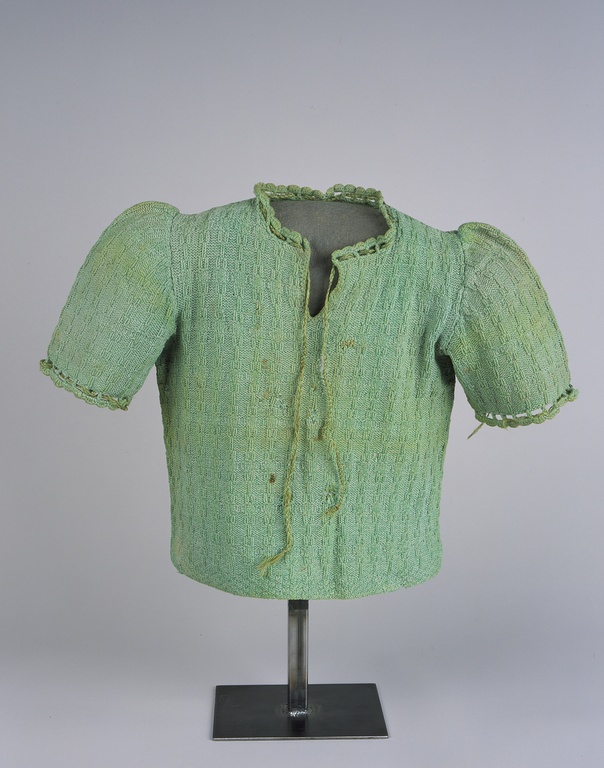
The final paper of the day was Krystyna Chiger: the girl in the green sweater presented by Elizabeth Baer, Professor at Gustavus Adolphus College, Minnesota, USA. In the presentation we got to know a little about the life of Krystyna Chiger, a young polish girl who survived the holocaust, after hiding with her family in a sewer under the Lvov ghetto for 14 months until their liberation in 1944. During her time in the sewer, Krystyna wore a green, short sleeved sweater that her grandmother had knitted for her. The sweater was mended and used after the liberation, and later having emigrated to the USA, Krystyna donated it to the US Holocaust Memorial Museum. In a 2007 interview Krystyna stated that she did not know why the green sweater had been one of the few possessions that she took with her to the sewer, but that during her time underground, the green sweater became a representation of her grandmother’s love and, by extension, an instrument for her survival. Baer then concluded by talking about Lea Stern, who examined the green sweater in the museum and took a pattern from it. She knitted several reproductions to test the pattern. In one of the images Baer shared, we saw Krystyna Chiger with one of the reproductions, which fittingly closed the circle, or loop, of the green sweater. Baer’s presentation was very moving, and several participants mentioned her paper in their feedback, as in this example: ‘I was particularly moved by the final programme. Garments can tell such powerful stories and it is so important that they are recorded and shared. Especially as we seem to be living in strange times.’
Before the conference ended, Professor Sandy Black summarised the day and pointed out the variety and the long timespan covered in the papers presented at this year’s Knitting History Forum conference. Black concluded by thanking the KHF team, the speakers and the participants. The chat was full of thanks from the participants and many said they were looking forward to next year already!
Johanna Gullback, PhD candidate in Textile Studies, Uppsala University, Sweden
Image: at the Knitting History Forum conference on Saturday 1 February 2025 Elizabeth Baer will discuss Krystyna Chiger’s green sweater, now at the United States Holocaust Memorial Museum in Washington DC
The Knitting History Forum is pleased to announce that the next annual conference is on Saturday 1 February 2025, with presentations on the history of knitting and crochet.
We have an exciting programme of speakers lined up for the online event:
Elizabeth Baer – A green sweater worn by a young Jewish girl hiding from the Nazis
Eleanor Gilchrist – The technology of the crochet pattern in the 1840s
Isa Holmgren – The creative process at Bohus Stickning, a Swedish textile association founded in 1939
Ryan Koenig – A reconstruction of the 16th century knitted cap from Ballybunion
Emily Rickard – A knitter’s vocabulary in capturing their emotional state
Trista Yeung – The historical development of knitting in China in the late 19th century and early 20th century
The Knitting History Forum is an international network for the history of knitting and crochet. KHF advances and promotes the history of knitting through research, exchange of ideas and information, and by historical reconstruction. Bookmark the KHF website!